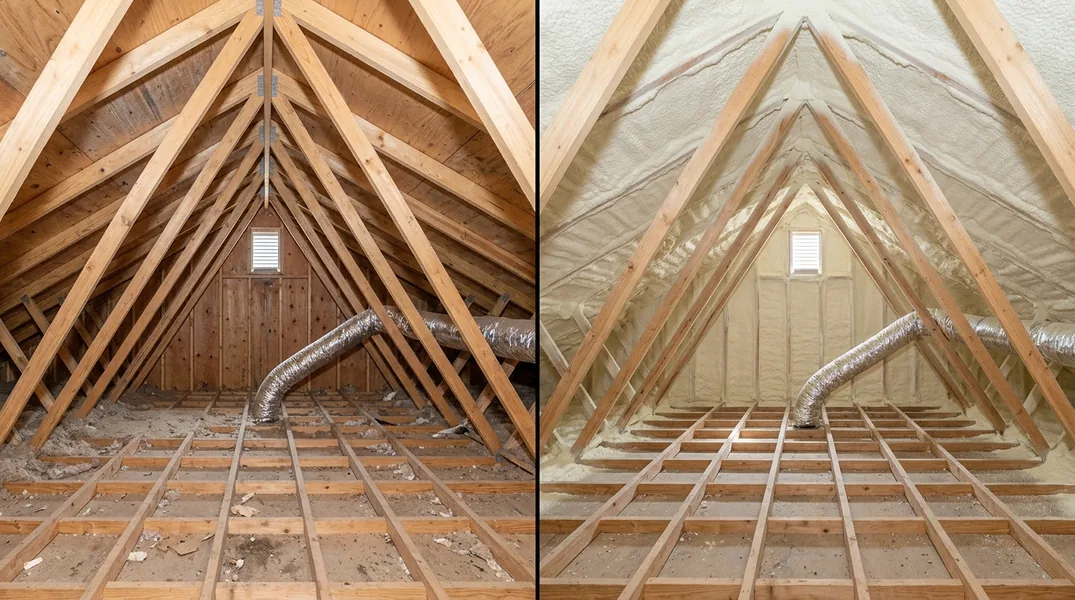
The Dilworth Bungalow Challenge: Red Clay Crawl Spaces and Moisture
Dilworth's charming early-20th-century bungalows are architectural treasures, but their crawl spaces dug into red clay present a unique insulation challenge. The dense, moisture-retaining soil beneath these homes creates an environment where traditional fiberglass batts fail quickly. Red clay absorbs and holds water, especially during Charlotte's humid summers and heavy rain events, making crawl space moisture control critical for home longevity.
Many Dilworth homeowners struggle with damp crawl spaces that compromise both comfort and structural integrity. The problem isn't just about staying warm in winter, it's about preventing mold, wood rot, and the musty odors that seep into living spaces above. Traditional insulation materials absorb moisture and lose their effectiveness, requiring constant replacement and maintenance. This is where Closed Cell Spray Foam Insulation has become a game-changer for homeowners in this neighborhood and throughout Charlotte.
Is Spray Foam Insulation Worth It for Your Dilworth Home?
The short answer is yes, especially for Dilworth bungalows with problematic crawl spaces. When you weigh the investment against the long-term benefits, spray foam delivers exceptional value. Unlike traditional insulation, closed cell foam creates an air-tight seal that stops moisture infiltration at the source. This means your crawl space stays dry, your home stays comfortable, and you avoid the expensive damage that comes from unchecked moisture and mold growth.
Homeowners often ask about return on investment, and the numbers tell a compelling story. Spray foam can reduce energy costs by 20 to 30 percent compared to conventional insulation, especially in older homes where air leaks are rampant. You'll notice lower heating and cooling bills month after month. Beyond energy savings, you're protecting your home's structural components from rot, extending the life of your foundation, and creating a healthier indoor environment. For a Dilworth bungalow sitting on red clay, that protection is invaluable. The initial pricing may be higher than fiberglass, but the durability, performance, and peace of mind justify the cost over the 20 to 30 year lifespan of the material.
Is Spray Foam Insulation Safe? Addressing Homeowner Concerns
Safety is a legitimate concern when considering any home improvement, and spray foam insulation is no exception. The good news is that when installed by certified professionals using proper equipment and safety protocols, spray foam is safe for your home and family. The key is understanding what happens during and after installation, and choosing a reputable contractor who follows industry standards.
During application, trained technicians wear protective gear and ensure proper ventilation. After installation, the foam cures completely within 24 to 48 hours, at which point it becomes a stable solid. The material is chemically stable and does not off-gas in any meaningful way after the curing period. However, improper installation by unqualified contractors can create problems. This is why selecting an experienced, fully insured company like Charlotte Spray Foam Insulation is essential. We use industry-standard equipment and follow all safety guidelines to ensure your crawl space is properly sealed without compromising indoor air quality.
Spray Foam Off-Gassing and Curing: What You Need to Know
Off-gassing is one of the most misunderstood aspects of spray foam insulation. When foam is first applied, it releases volatile organic compounds (VOCs) as it cures. This is a natural part of the chemical process, but it's temporary and manageable. The off-gassing period typically lasts 24 to 48 hours, during which the foam transitions from liquid to solid. After that window closes, off-gassing essentially stops because the material has fully polymerized.
During the curing period, proper ventilation is important. Professional installers ensure crawl space vents remain open and that your home is adequately ventilated during and immediately after application. For homeowners, this means you may notice a chemical odor in the first day or two, but it will fade quickly. Many people compare it to the smell of new carpet or paint. Once cured, the foam is completely stable and does not continue to release gases into your home. If you're concerned about off-gassing or have chemical sensitivities, discuss this openly with your contractor before work begins. Charlotte Spray Foam Insulation can answer all your questions and ensure the installation timeline works for your family's needs.
Spray Foam Insulation Pros and Cons: A Balanced Look
Like any building material, spray foam has distinct advantages and limitations worth considering. The pros are substantial: superior air sealing, moisture resistance, high R-value per inch, durability that lasts decades, and excellent performance in challenging environments like red clay crawl spaces. Spray foam expands to fill gaps and crevices that traditional insulation cannot reach, creating a complete thermal envelope. It prevents air leakage, reduces drafts, and performs exceptionally well in humid climates like Charlotte.
The cons are fewer but real. Upfront cost is higher than fiberglass or cellulose. Once installed, it's difficult to modify or remove if you need to access wiring or plumbing later. Some people have concerns about off-gassing, though as discussed, this is temporary and manageable with proper installation. Spray foam also requires professional installation, which means you cannot DIY the project. For crawl spaces dug into red clay, however, the cons are far outweighed by the benefits. The moisture resistance alone justifies the investment for Dilworth homeowners dealing with chronic dampness.
Spray Foam Insulation Problems to Avoid: Professional Installation Matters
Most spray foam problems stem from poor installation by inexperienced contractors. Common issues include improper mixing of chemicals, inadequate thickness, incomplete coverage, and failure to address ventilation during curing. These mistakes can result in reduced performance, incomplete air sealing, or moisture issues that defeat the purpose of the insulation. Another problem occurs when foam is installed over moisture-laden surfaces or in inadequately ventilated spaces, trapping moisture and promoting mold growth.
This is why hiring a qualified, insured contractor is non-negotiable. Charlotte Spray Foam Insulation brings years of experience, proper equipment, and adherence to industry best practices to every project. We assess your crawl space condition, prepare surfaces correctly, apply foam to the appropriate thickness, and ensure proper curing conditions. We also address any existing moisture problems before insulation begins. By choosing professionals who understand the specific challenges of Dilworth homes and red clay foundations, you avoid costly mistakes and ensure your investment performs as intended. If you're ready to eliminate crawl space problems and protect your home, contact us for a free estimate or call (980) 217-3281 to discuss your project.
Looking for a professional spray foam insulation contractor in Charlotte? Charlotte Spray Foam Insulation responds fast for all your spray foam insulation needs.
Get a Free Quote