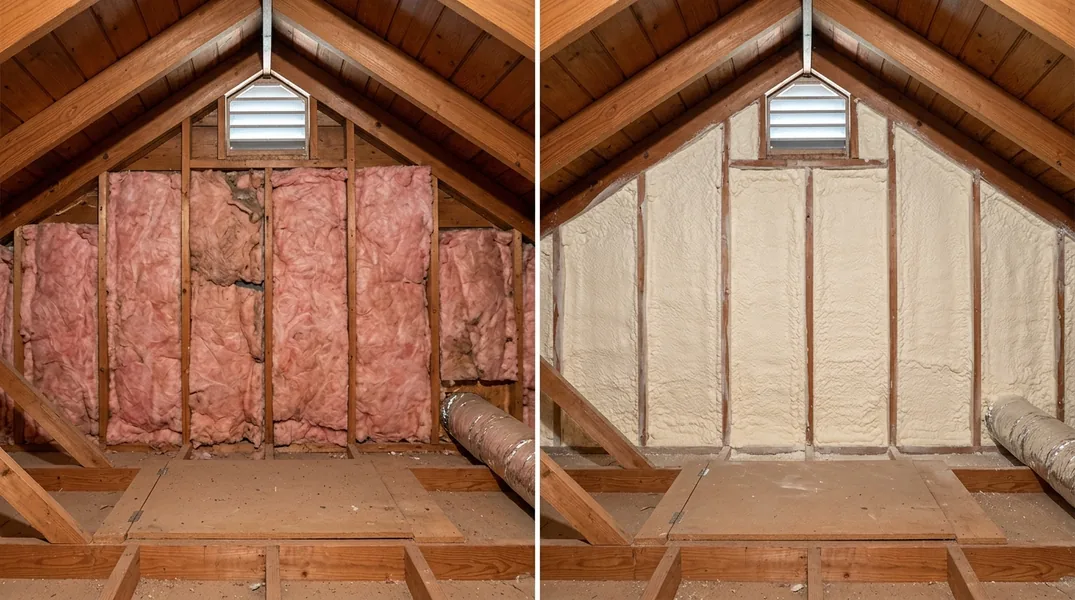
Understanding Spray Foam Attic Insulation Basics
When you're considering Attic Spray Foam Insulation for your Charlotte home, you'll quickly encounter two main options: open cell and closed cell spray foam. Both are polyurethane-based products that expand when applied, creating an effective air seal and thermal barrier in your attic. However, they differ significantly in their structure, performance characteristics, and suitability for different applications.
The fundamental difference lies in their cellular structure. Open cell foam has cells that are not completely enclosed, allowing air and moisture to pass through the material. Closed cell foam, by contrast, has tightly sealed cells that create a completely impermeable barrier. This structural difference affects everything from R-value per inch to moisture resistance, making it crucial to understand which type aligns with your home's specific needs and pricing expectations.
Open Cell Spray Foam Insulation: The Affordable Option
Open Cell Spray Foam Insulation is a lower-density product that typically provides an R-value of approximately 3.6 to 3.8 per inch. Because the cells are open, the foam is softer and more flexible than its closed cell counterpart. This makes it easier to apply in tight spaces and around obstacles commonly found in attic installations, such as electrical wiring, plumbing, and HVAC ducts. The material also allows for easier cutting and trimming after installation.
One of the primary advantages of open cell foam is its cost effectiveness. It generally costs less per board foot than closed cell foam, making it an attractive option for homeowners working within a budget. Additionally, open cell foam is vapor permeable, meaning it allows moisture vapor to pass through it. In Charlotte's humid climate, this characteristic can be beneficial when properly installed with appropriate ventilation strategies. However, open cell foam does require a vapor barrier on the warm side of the insulation to prevent moisture accumulation within the foam itself.
Closed Cell Spray Foam Insulation: Maximum Performance and Protection
Closed Cell Spray Foam Insulation is a higher-density product that delivers superior insulation performance with an R-value of approximately 6.0 to 6.5 per inch. This means you need less thickness to achieve the same thermal resistance compared to open cell foam. The closed cell structure creates a vapor barrier within the foam itself, eliminating the need for a separate vapor barrier installation. This integral moisture protection makes closed cell foam particularly valuable in humid climates and for Charlotte homes where moisture control is essential.
The superior moisture resistance of closed cell foam makes it ideal for creating what's known as an unvented attic spray foam installation. When applied to the underside of your roof deck, closed cell foam can create a sealed attic environment that prevents warm, moist air from entering the attic space during winter months. This approach has become increasingly popular among homeowners seeking to improve energy efficiency and prevent moisture-related issues like mold growth and wood rot. The higher cost of closed cell foam is often offset by its superior performance and durability over the long term.
Sealed Attic Insulation: Creating an Unvented Attic Environment
Creating a sealed attic insulation system has become a popular strategy for homeowners seeking maximum energy efficiency and climate control. An unvented attic approach involves applying spray foam insulation directly to the roof deck and exterior walls of your attic space, rather than insulating the attic floor. This strategy brings the attic into the home's conditioned space, eliminating the temperature and humidity fluctuations that typically occur in vented attics.
The benefits of this approach are substantial. By creating an unvented attic environment, you can extend the life of roofing materials, prevent ice damming in winter, reduce moisture-related problems, and improve overall comfort in upper-floor rooms. Closed cell foam is the preferred choice for this application because its vapor impermeability prevents warm, humid air from migrating into the attic space. This is particularly important in Charlotte's climate, where summer humidity levels are consistently high. Homeowners who invest in a sealed attic insulation system typically report improved energy bills and greater comfort year-round.
Choosing Between Open and Closed Cell for Your Charlotte Home
Selecting between open cell and closed cell spray foam requires careful consideration of several factors specific to your situation. Your budget is certainly important, but it shouldn't be the only deciding factor. Consider the climate in which you live, your home's current moisture issues, your attic's accessibility, and your long-term energy efficiency goals. Homeowners in Charlotte who experience frequent humidity and moisture concerns often find that closed cell foam's superior moisture resistance justifies the higher upfront investment.
The intended application also matters significantly. If you're planning to create an unvented attic with spray foam applied to the roof deck, closed cell foam is the better choice. If you're insulating the attic floor in a vented attic space and moisture isn't a primary concern, open cell foam may be sufficient and more economical. The best approach is to consult with experienced professionals who understand Charlotte's specific climate challenges and can evaluate your attic's unique characteristics. Charlotte Spray Foam Insulation can assess your home's condition and recommend the most appropriate solution for your needs. Contact us at (980) 217-3281 or request a free estimate today.
Attic Spray Foam Insulation Cost in Charlotte: What to Budget
Understanding the cost difference between open cell and closed cell spray foam is essential for budgeting your insulation project. Open cell foam typically costs between 0.50 and 1.00 per board foot, while closed cell foam generally ranges from 1.50 to 2.50 per board foot or more, depending on local market conditions and the complexity of your installation. However, these are material costs only. The total project cost includes labor, equipment, and any necessary preparatory work.
When evaluating pricing for your attic spray foam insulation project, consider the long-term value rather than just the initial expense. Closed cell foam's superior R-value per inch means you may need less material to achieve your target insulation level. Additionally, the improved energy efficiency and moisture protection often lead to lower utility bills and reduced maintenance costs over time. For an accurate assessment of what your specific project will cost, Charlotte Spray Foam Insulation recommends obtaining a free estimate. Call (980) 217-3281 to schedule a consultation and receive a detailed quote tailored to your home's requirements.
Looking for a professional spray foam insulation contractor in Charlotte? Charlotte Spray Foam Insulation responds fast for all your spray foam insulation needs.
Get a Free Quote