The Cotswold Mid-Century Ranch Problem: Why Old Attics Settle
Cotswold's charming mid-century ranches are architectural gems that defined Charlotte's residential landscape. Built primarily between the 1950s and 1970s, these homes feature classic single-story designs, open floor plans, and the solid construction that made them beloved by generations of homeowners. However, many of these properties share a common problem: their attic insulation has settled, compressed, and lost its thermal effectiveness over the decades.
When homes were originally built, contractors typically installed blown-in cellulose, fiberglass, or mineral wool insulation. These materials were affordable and quick to install, making them the standard choice for post-war residential construction. But here's the issue: over 50 years, gravity, moisture, and temperature fluctuations cause these loose-fill materials to compact and settle. A layer that started at R-19 or R-21 may have compressed to an effective R-7 or R-8. For homeowners in Charlotte with these older homes, this means higher energy bills, inconsistent indoor temperatures, and reduced comfort year-round.
Spray Foam vs Blown-In Insulation: Why Settlement Isn't an Issue
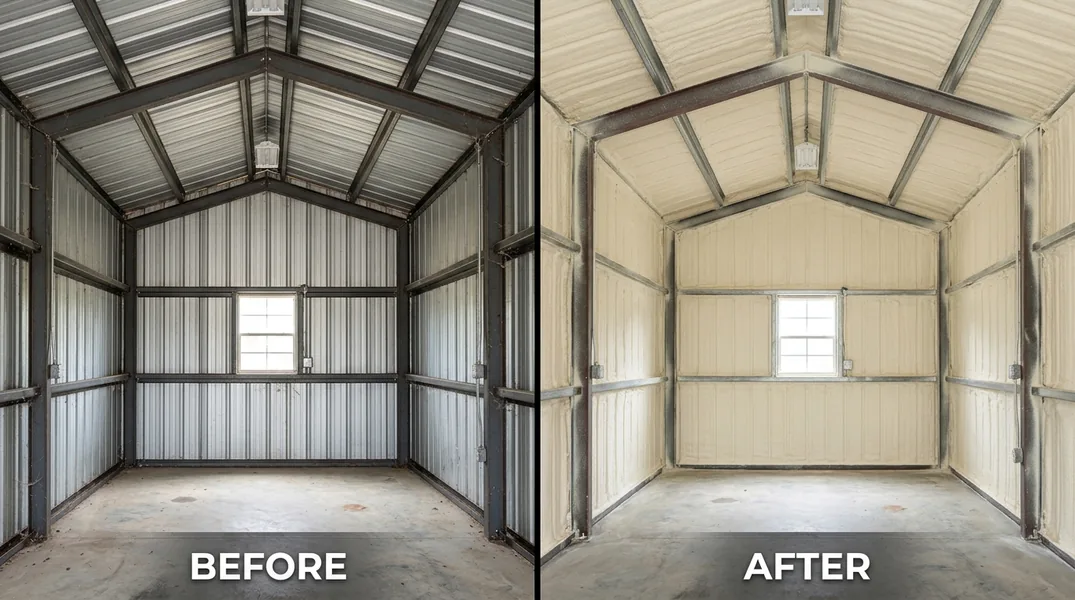
The fundamental difference between Attic Spray Foam Insulation and blown-in insulation comes down to how they work and how they age. Blown-in materials like cellulose and fiberglass are loose particles that rely on their density to resist heat transfer. Over time, these particles shift, compact, and lose contact with one another, creating air gaps and reducing R-value. Spray foam, by contrast, is a liquid polymer that expands and hardens into a solid, monolithic mass. Once cured, it doesn't settle, compress, or lose its thermal properties.
When you choose spray foam over blown-in insulation, you're investing in a solution that will maintain its R-value for decades. The foam creates an air-tight seal that blocks convective heat transfer, which is something loose-fill materials simply cannot achieve. For homeowners dealing with the reality of settled attic insulation in Cotswold's older ranches, spray foam represents a permanent upgrade that eliminates the need for future top-ups or replacements.
Spray Foam vs Fiberglass: Durability and Performance in Older Homes
Fiberglass batts were another popular choice for mid-century construction, particularly in walls and attic floors. While fiberglass is inexpensive and easy to install, it shares the same fundamental weakness as blown-in cellulose: it settles and degrades over time. Additionally, fiberglass is hygroscopic, meaning it absorbs moisture. In humid climates like Charlotte, moisture absorption can reduce the material's R-value by up to 50 percent and create conditions for mold growth.
Spray foam doesn't absorb moisture and doesn't settle. When properly installed, it creates a continuous thermal and moisture barrier that actually improves over time rather than deteriorating. Closed Cell Spray Foam Insulation is particularly effective because its dense structure provides superior moisture resistance, structural support, and air sealing. For Cotswold homeowners tired of dealing with the limitations of aging fiberglass, spray foam is a game-changing alternative that delivers measurable comfort and energy savings.
Spray Foam vs Cellulose: Why Cellulose Fails in Settled Attics
Cellulose was widely used in attic insulation during the 1960s through 1980s because it was inexpensive and offered decent R-value when freshly installed. However, cellulose has several critical weaknesses that make it particularly problematic in older homes. First, it settles dramatically over time, losing 20 to 30 percent of its original R-value within the first five years. Second, cellulose is highly susceptible to moisture damage and can support mold growth if exposed to humidity. Third, it can attract pests and rodents, which tunnel through it and further compromise its insulating properties.
If your Cotswold ranch home still has original cellulose insulation in the attic, it's almost certainly underperforming. Spray foam eliminates every one of these problems. It doesn't settle, resists moisture, and creates a barrier that pests cannot penetrate. While the upfront cost of spray foam is higher than cellulose, the long-term performance and durability make it the best insulation for attic applications in older homes.
Attic Spray Foam Insulation Near Me: When to Call a Professional
If you own a mid-century ranch in Cotswold and suspect your attic insulation has settled, the best first step is to have a professional energy audit performed. A qualified technician can assess your current insulation depth, R-value, and condition, then recommend the most cost-effective solution for your home. Many homeowners are surprised to learn that their attic insulation is performing at less than half its original rating.
Charlotte Spray Foam Insulation specializes in retrofitting older homes throughout the Charlotte area. We remove settled or ineffective insulation and install spray foam that will perform reliably for decades. The process is clean, efficient, and typically completed in a single day. If you're ready to stop losing money to poor attic insulation, contact us at (980) 217-3281 or request a free estimate today. We serve Cotswold, Pineville, Matthews, Mint Hill, and surrounding communities.
Attic Spray Foam Insulation Cost in Charlotte: What to Budget
The pricing for spray foam insulation varies based on attic size, current insulation condition, and whether you choose closed-cell or open-cell foam. Closed-cell foam is denser and offers higher R-value per inch, making it ideal for attics with space constraints. Open-cell foam is lighter, less expensive, and still highly effective for most residential applications. For a typical Cotswold mid-century ranch with 1,200 to 1,500 square feet of attic space, homeowners can expect to invest between $2,500 and $5,000 for a complete spray foam retrofit.
While this may seem significant compared to blown-in insulation, remember that spray foam is a one-time investment that lasts 80+ years without degradation. You won't need to add more insulation in five years or deal with settling and performance loss. The energy savings typically pay for the installation within 5 to 7 years, and you'll enjoy improved comfort, reduced utility bills, and better home value for decades to come. To discuss your specific situation and get an accurate quote, call Charlotte Spray Foam Insulation at (980) 217-3281 or visit our website for more details on pricing in your area.
Looking for a professional spray foam insulation contractor in Charlotte? Charlotte Spray Foam Insulation responds fast for all your spray foam insulation needs.
Get a Free Quote